
Most keto plans you find online were written for someone else. They assume the same body weight, the same activity level, and the same goals — which is exactly why so many people stall after week three.
A custom keto diet plan solves that problem. Instead of copying a generic template, you calculate your own macronutrient targets, then layer in the micronutrients that keto diets commonly run short on. The result is a plan that fits your body, your schedule, and your food preferences.
This guide walks through both halves of the equation: getting your macros right, and making sure your micros don’t get forgotten along the way.
A quick note: This article is general education, not medical advice. Ketogenic diets are not appropriate for everyone — particularly people who are pregnant, managing type 1 diabetes, taking blood sugar or blood pressure medication, or living with kidney, liver, or pancreatic conditions. Talk to a doctor or registered dietitian before you start.
What Is a Custom Keto Diet Plan?
A custom keto diet plan is a personalized eating strategy that keeps carbohydrates low enough to sustain nutritional ketosis while meeting your individual calorie, protein, and micronutrient needs.
In practice, it has four moving parts:
- A calorie target based on your body and goals
- A macro split — fat, protein, and carbohydrate — expressed in grams, not just percentages
- A micronutrient plan covering electrolytes, vitamins, and minerals
- A food list you’ll actually enjoy eating long enough for the plan to work
Standard keto templates handle the first two loosely and ignore the third almost entirely. That’s usually where things go wrong.
Understanding Keto Macros
Ketosis happens when carbohydrate intake drops low enough that your liver begins converting fatty acids into ketone bodies for fuel. Most people reach that state somewhere between 20 and 50 grams of carbs per day, though the exact threshold varies by person, activity level, and metabolic health.
The Three Macronutrients
Fat — roughly 60–75% of calories. Fat is your primary energy source on keto, but it’s the adjustable macro. If you’re eating in a calorie deficit, some of that fat is coming off your body rather than your plate. Prioritize olive oil, avocado, fatty fish, nuts, and whole eggs over processed oils.
Protein — roughly 20–30% of calories. Protein preserves muscle mass and keeps you full. The old advice that “too much protein kicks you out of ketosis” is largely overstated for most people; gluconeogenesis is demand-driven, not supply-driven. Eating adequate protein is generally more important than chasing maximum ketone readings.
Carbohydrates — roughly 5–10% of calories. This is your non-negotiable ceiling. Most people track net carbs (total carbs minus fiber and sugar alcohols), which lets you eat a generous volume of vegetables without breaking through your limit.
Percentages vs. Grams
Percentages are useful for describing a diet. Grams are what you actually eat.
Two people can both follow “70/25/5” and end up hundreds of calories apart. Always convert your split into gram targets, using these conversions:
| Macronutrient | Calories per gram |
|---|---|
| Fat | 9 |
| Protein | 4 |
| Carbohydrate | 4 |
Why Micronutrients Matter on Keto
Here’s the part most plans skip. When you remove grains, most fruit, legumes, and starchy vegetables, you also remove a large share of your usual vitamin and mineral intake. And because ketogenic diets lower insulin levels, your kidneys excrete more sodium and water — taking potassium and magnesium along for the ride.
That combination explains most of what people call the “keto flu”: headaches, fatigue, muscle cramps, brain fog, and irritability during the first one to two weeks.
The Electrolytes That Matter Most
Sodium. Counterintuitively, many people need more sodium on keto, not less. Salting food to taste and adding broth is usually enough. (People with hypertension or on blood pressure medication should check with their doctor first.)
Potassium. Found in avocado, spinach, Swiss chard, mushrooms, salmon, and nuts. Low potassium is a common cause of keto-related muscle cramps.
Magnesium. Pumpkin seeds, almonds, dark leafy greens, and dark chocolate (85%+) are solid sources. Magnesium is one of the most commonly under-consumed minerals on Western diets generally, and keto doesn’t help.
Other Nutrients Worth Watching
- Fiber — from avocado, chia and flax seeds, broccoli, cauliflower, and leafy greens
- Vitamin C — bell peppers, broccoli, cabbage, and small portions of berries
- Folate — dark leafy greens, asparagus, and avocado
- Calcium — dairy, sardines with bones, almonds, and leafy greens
- Omega-3s — salmon, sardines, mackerel, walnuts, and flaxseed
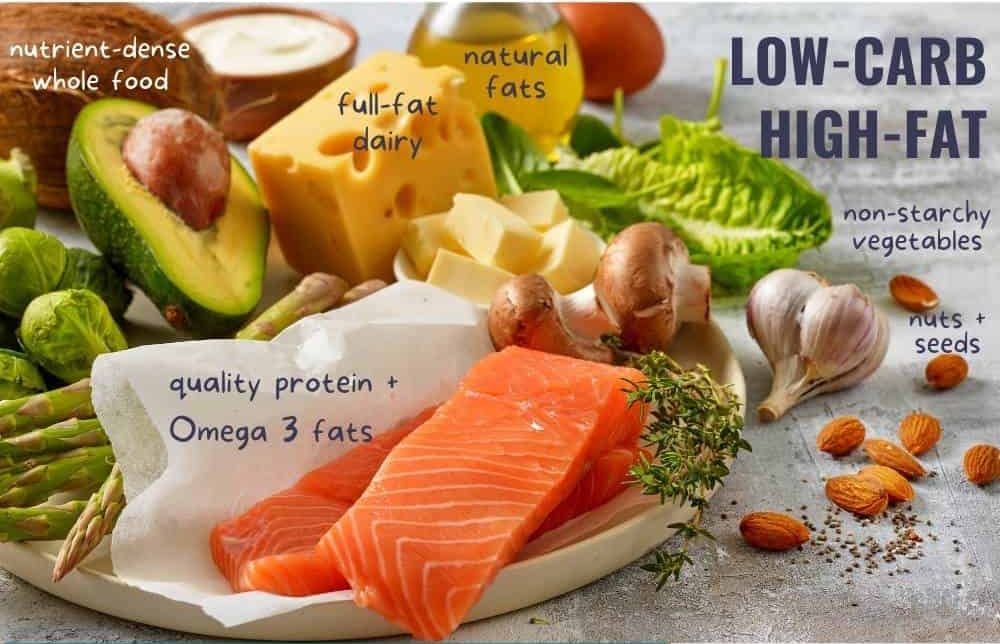
The practical rule: build every meal around a protein source, a fat source, and a non-starchy vegetable. Do that consistently and most micronutrient gaps close on their own.
Step-by-Step: How to Build Your Custom Keto Plan
Step 1: Estimate Your Daily Calorie Needs
Start with your basal metabolic rate (BMR), then multiply by an activity factor. The Mifflin-St Jeor equation is the most widely used:
- Men: (10 × weight in kg) + (6.25 × height in cm) − (5 × age) + 5
- Women: (10 × weight in kg) + (6.25 × height in cm) − (5 × age) − 161
Multiply the result by roughly 1.2 (sedentary), 1.4 (lightly active), 1.6 (moderately active), or 1.8 (very active) to estimate total daily energy expenditure.
Treat this number as a starting hypothesis, not a fact. Real-world results over two to three weeks matter more than the formula.
Step 2: Set Your Goal Adjustment
- Fat loss: a modest deficit, commonly 10–20% below maintenance
- Maintenance: stay at your estimate
- Muscle gain: a small surplus, commonly 5–10% above maintenance
Aggressive deficits tend to backfire — they cost you muscle, energy, and adherence.
Step 3: Lock In Your Carb Ceiling
Choose a daily net carb limit:
- 20g — strictest, fastest route into ketosis, best for beginners testing the waters
- 30–35g — moderate, more vegetable variety, easier to sustain
- 40–50g — suitable for many active people and endurance athletes
Step 4: Set Protein Based on Body Weight
Protein is the macro you should anchor to your body, not to a percentage. A common range is 1.2–2.0 g per kg of body weight (roughly 0.6–0.9 g per pound), with the higher end suited to people who strength train or are losing weight.
If you’re carrying significant excess weight, calculate from lean body mass or goal weight rather than current weight.
Step 5: Fill the Remainder With Fat
Subtract your protein and carb calories from your total, then divide what’s left by 9. That’s your fat target in grams.
Worked example — a 70 kg moderately active woman aiming for fat loss:
- Estimated maintenance: 2,000 kcal → 15% deficit → 1,700 kcal
- Carbs: 25 g → 100 kcal
- Protein: 1.6 g/kg × 70 kg = 112 g → 448 kcal
- Remaining: 1,700 − 100 − 448 = 1,152 kcal ÷ 9 = 128 g fat
Final targets: 128 g fat / 112 g protein / 25 g net carbs
Step 6: Build Your Micronutrient Layer
Add these non-negotiables to your daily template:
- Two servings of leafy greens or cruciferous vegetables
- One potassium-rich food (avocado, salmon, spinach)
- One magnesium source (pumpkin seeds, almonds, dark chocolate)
- Fatty fish two to three times per week
- Adequate salt, adjusted to how you feel
Step 7: Track, Review, and Adjust
Log your food for two to three weeks using an app that shows micronutrients as well as macros. Then review honestly:
- Weight not moving after three weeks? Reduce calories by about 10% or add activity.
- Cramping, headaches, or fatigue? Look at electrolytes before you blame the diet.
- Constantly hungry? Nudge protein up and fat slightly down.
- Can’t stick to it? Simplify. A plan you follow at 80% beats a perfect plan you abandon.
A Sample Day at 1,700 Calories
Breakfast: Three eggs scrambled in butter with spinach and mushrooms, half an avocado Lunch: Grilled salmon over mixed greens with olive oil, pumpkin seeds, and cucumber Snack: A small handful of almonds and two squares of 90% dark chocolate Dinner: Chicken thighs with roasted broccoli and cauliflower, tossed in olive oil and garlic Hydration: Water throughout the day, plus a cup of salted bone broth in the afternoon
Notice how the micronutrients handle themselves: leafy greens, avocado, seeds, cruciferous vegetables, and fatty fish all appear without any special effort.
Benefits of a Custom Keto Plan
- Better adherence. A plan built around foods you like is one you’ll actually follow.
- Fewer keto flu symptoms. Planning electrolytes upfront prevents most of the early misery.
- Muscle preservation. Individualized protein targets protect lean mass during weight loss.
- Appetite control. Adequate protein and fat are highly satiating for most people.
- Stable energy. Steadier blood sugar often means fewer afternoon crashes.
- Real personalization. Athletes, office workers, and shift workers all need different plans.
Drawbacks and Considerations
Keto isn’t a universal solution, and an honest plan accounts for that.
- The adaptation period is genuinely uncomfortable for many people, lasting one to two weeks.
- Social eating gets harder. Restaurants, weddings, and holidays require planning.
- Tracking takes effort, especially in the first month.
- Nutrient gaps are real if you eat a narrow, meat-and-cheese-only version of keto.
- Some medications need adjustment. This is particularly important for diabetes and blood pressure medication — a conversation to have with your doctor, not an internet article.
- Endurance athletes may see reduced high-intensity performance, at least during adaptation.
- Long-term research is still developing. Most high-quality studies cover months rather than decades.
Common Mistakes to Avoid
- Ignoring electrolytes. The single most preventable source of early failure.
- Fearing protein. Under-eating protein costs you muscle and satiety.
- Eating “keto products” instead of food. Bars and cookies labeled keto are still processed food.
- Skipping vegetables. They’re your main source of fiber, folate, potassium, and vitamin C.
- Chasing ketone readings. High ketones don’t automatically mean faster fat loss.
- Never adjusting. Your calorie needs change as your body changes.
Frequently Asked Questions
How many carbs should I eat on a custom keto diet plan?
Most people enter and maintain ketosis at 20–50 grams of net carbs per day. Beginners often start at 20 grams to establish ketosis quickly, then test slightly higher intakes to find their personal threshold.
How do I calculate my keto macros?
Estimate your daily calorie needs, adjust for your goal, set your carb ceiling (usually 20–50 g), set protein at 1.2–2.0 g per kg of body weight, and allocate all remaining calories to fat by dividing by 9.
Can too much protein kick me out of ketosis?
For most people, no. Gluconeogenesis is largely demand-driven rather than supply-driven, meaning your body produces glucose based on need rather than simply because protein is available. Adequate protein is generally more valuable than maximizing ketone levels.
What causes keto flu, and how do I prevent it?
Keto flu is mainly driven by fluid and electrolyte losses as insulin levels fall. Prevention centers on adequate sodium, potassium, and magnesium, plus consistent hydration during the first two weeks.
Do I need supplements on keto?
Not necessarily. A well-planned keto diet built on vegetables, fatty fish, eggs, nuts, and seeds covers most needs. Magnesium and electrolyte supplements are the most commonly useful additions — a doctor or dietitian can advise on your specific situation.
How long does it take to enter ketosis?
Typically two to four days at 20–30 grams of carbs per day, though it can take longer depending on activity, prior diet, and individual metabolism. Becoming fully fat-adapted takes several weeks beyond that.
Should I count total carbs or net carbs?
Most people use net carbs (total carbs minus fiber and sugar alcohols), which allows a larger volume of vegetables. If your results stall, switching to total carbs is a reasonable troubleshooting step.
Can I build muscle on a ketogenic diet?
Yes, provided protein intake is adequate, calories are sufficient, and resistance training is consistent. Some people find high-volume training harder on keto, particularly early on.
How do I know if my plan is working?
Look at the full picture over three to four weeks: body measurements, energy levels, sleep quality, training performance, and how you feel — not just the scale, which fluctuates significantly with water balance on keto.
Conclusion
Building a custom keto diet plan comes down to two disciplines that most people treat as one.
The first is macros: set a realistic calorie target, cap your carbs, anchor your protein to your body weight, and let fat fill the remainder. The second is micros: plan for sodium, potassium, and magnesium from the start, and build meals around vegetables, fatty fish, nuts, and seeds so vitamins and minerals take care of themselves.
Get both right and keto stops being a two-week experiment that ends in headaches and cravings. It becomes something you can actually sustain — and sustainability, far more than any particular macro ratio, is what produces results.
Start with the calculations in Step 1, track honestly for three weeks, and adjust based on what your body tells you rather than what a template promised.
Leave a Reply